9 sites found
The Botswana Energy Regulatory Authority (BERA) is the statutory body responsible for regulating the energy sector in Botswana, covering electricity, petroleum, natural gas, coal and renewable energy. Its primary mandate is to provide economic regulation that promotes a competitive, reliable and affordable energy environment in line with international best practice.
BERA sets and enforces service standards across the electricity, petroleum, natural gas, coal and renewable energy sub-sectors, while safeguarding consumers from monopoly practices. The organisation provides information on licensing, tenders, careers and regulatory documents relevant to energy industry stakeholders and the public. Through its website, BERA shares news, publications and contact details to support transparency and engagement with businesses and consumers across Botswana.
The Botswana Communications Regulatory Authority (BOCRA) is the statutory body responsible for regulating the communications sector in Botswana. It oversees telecommunications, internet and ICT services, radio communications, broadcasting, and postal services. BOCRA replaced the former separate telecommunications and broadcasting regulators to create a single, converged regulatory authority.
The website provides information on licensing requirements for telecommunications, broadcasting, and postal operators, as well as access to online portals for license verification, type approval, and equipment registration. It also offers resources on spectrum planning, the national numbering plan, consumer complaints procedures, and relevant legislation and policy documents. Additional services include the management of the .bw domain registry and the national Computer Incident Response Team (CIRT) for cybersecurity matters.

The Botswana Qualifications Authority (BQA) is a statutory body established under the Botswana Qualifications Authority Act, 2013, responsible for developing and maintaining the National Credit and Qualifications Framework (NCQF). It oversees registration and accreditation of Education and Training Providers, registration of qualifications, and accreditation of learning programmes across Botswana. The Authority also conducts institutional audits and framework maintenance to ensure quality and integrity in education and training.
BQA also offers evaluation of local and foreign qualifications, registration of assessors and moderators, and capacity building for education and training stakeholders. It publishes annual reports, research articles, brochures, and policy documents to keep the public informed of its activities. Based in Gaborone, BQA provides a learner centre, online submission systems, and channels for complaints and whistleblowing to support transparency.

The Competition and Consumer Authority (CCA) is a Botswana statutory body responsible for enforcing competition and consumer protection laws in the country. It took over the functions of the former Consumer Affairs Department under the Ministry of Investment, Trade and Industry in December 2019. The Authority works to prevent anti-competitive practices, promote free market competition, and safeguard the rights of consumers across Botswana.
Through its various divisions, the CCA handles mergers and monopolies review, investigations, policy and research, legal services, and consumer protection matters. The website provides access to complaint forms, merger notices and decisions, guidelines, annual reports, newsletters, and relevant legislation such as the Competition Act and Consumer Protection Act. It also lists job opportunities, tenders, and public notices relevant to businesses and consumers seeking information or redress.
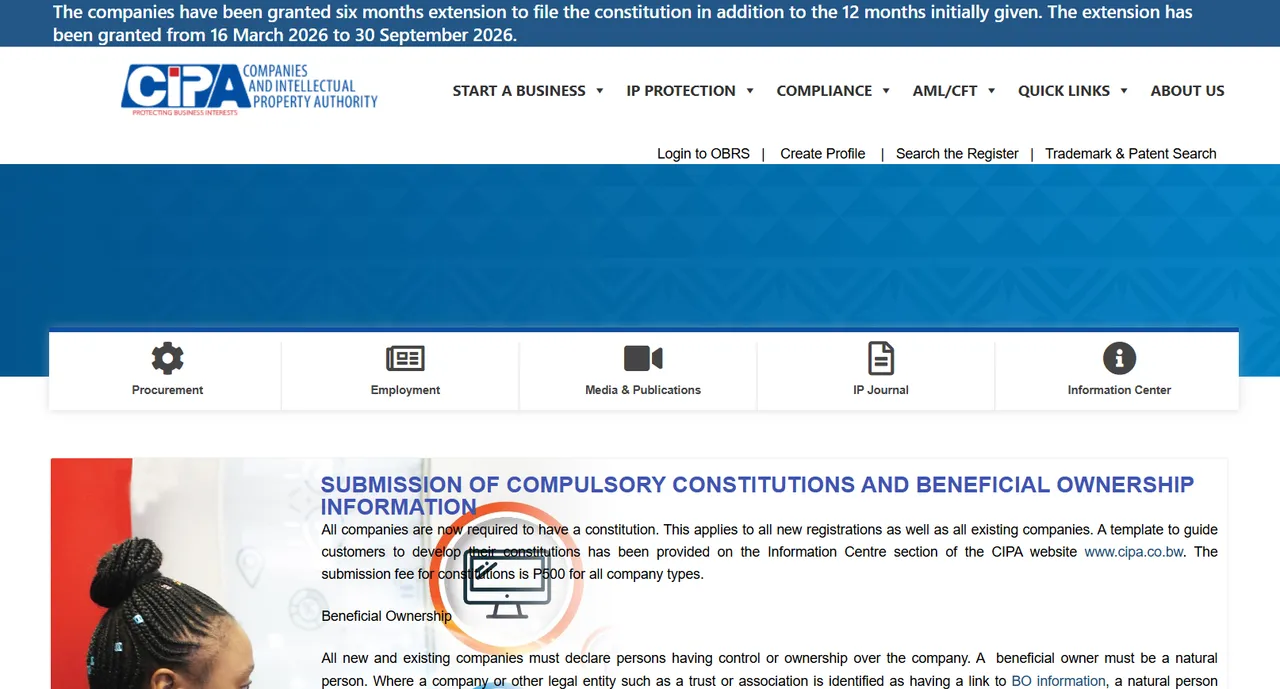
The Companies and Intellectual Property Authority (CIPA) is a Botswana government agency responsible for the registration of companies, business names, and intellectual property rights such as trademarks and patents. It administers the Online Business Registration System (OBRS), enabling entrepreneurs and businesses to register companies electronically. CIPA also oversees compliance requirements, including the submission of company constitutions and beneficial ownership information as mandated by law.
Through its website, CIPA provides guidance documents, templates, and forms to assist businesses in meeting statutory registration and compliance obligations. Users can access information on registration fees, payment methods, and notification services delivered via SMS and email. The platform also features a call centre and WhatsApp support to assist customers with queries related to company and intellectual property registration processes.
The Government of Botswana Information Portal is the official online platform for accessing government information, public services, and updates from ministries, departments, agencies, local authorities, and other public institutions. It provides information on a wide range of topics including business registration, education, healthcare, immigration, transport, agriculture, taxation, and social services. The portal also offers access to government news, official announcements, publications, and links to online public services such as eVisa and the 1Gov platform.
The website serves as a central resource for citizens, residents, businesses, and visitors seeking information about government programmes, policies, and administrative procedures in Botswana. Users can find contact details for government institutions, explore service categories, and access guidance on completing government-related processes.
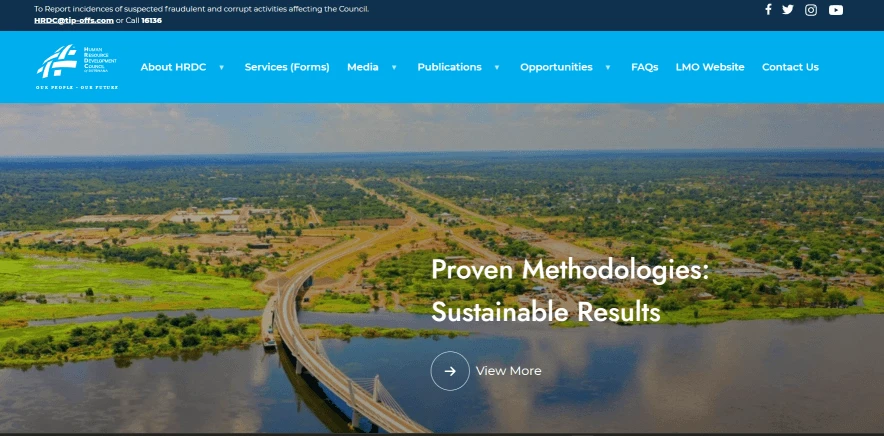
The Human Resource Development Council (HRDC) is a statutory body established under the HRDC Act No. 17 of 2013 to advise the Botswana Government on national human resource development. It coordinates efforts between the public sector, private sector and civil society to implement the National Human Resource Development Strategy (NHRDS). The Council studies the country's education and skills development systems, identifies gaps and proposes solutions aligned with national priorities.
HRDC's core services include Work-Place Planning and Learning, administration of the Human Resource Development Fund (HRDF), and Human Resource Development Planning through skills plans. The HRDF operates a levy-grant system where employers contribute training levies and are reimbursed for costs incurred training citizen employees. The website also provides access to publications, statistics reports, tenders, job vacancies and news on HRDC's ongoing programmes and partnerships.
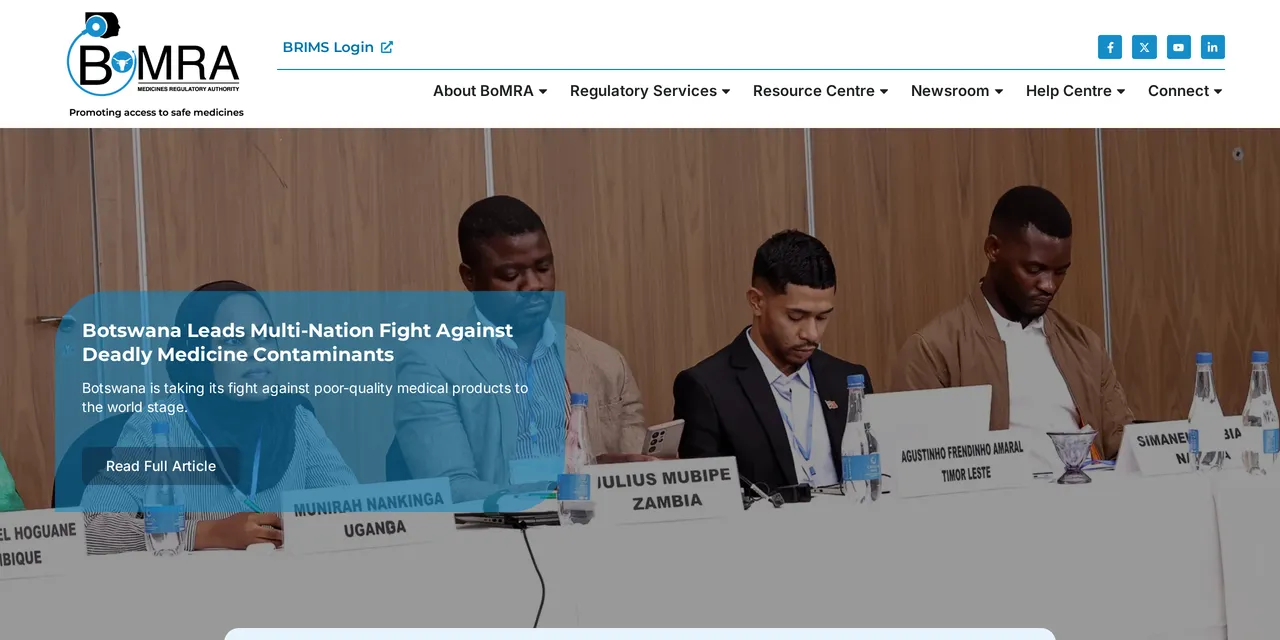
The Botswana Medicines Regulatory Authority (BoMRA) is the statutory body regulating medicines, medical devices, cosmetics and related health products in Botswana. It oversees registration, licensing and authorisation of human and veterinary medicines, complementary medicines, medical devices and cosmetics before market entry. BoMRA also conducts inspections, enforces compliance and monitors clinical trials to ensure products meet safety and quality standards.
Its website offers regulatory forms, guidelines, legislation, fee schedules and product registers for manufacturers, importers, healthcare professionals and the public. The site supports pharmacovigilance, including reporting of adverse drug reactions, side effects and safety alerts or recalls. It also provides tender notices, career opportunities, press releases and a complaints system for service-related concerns.
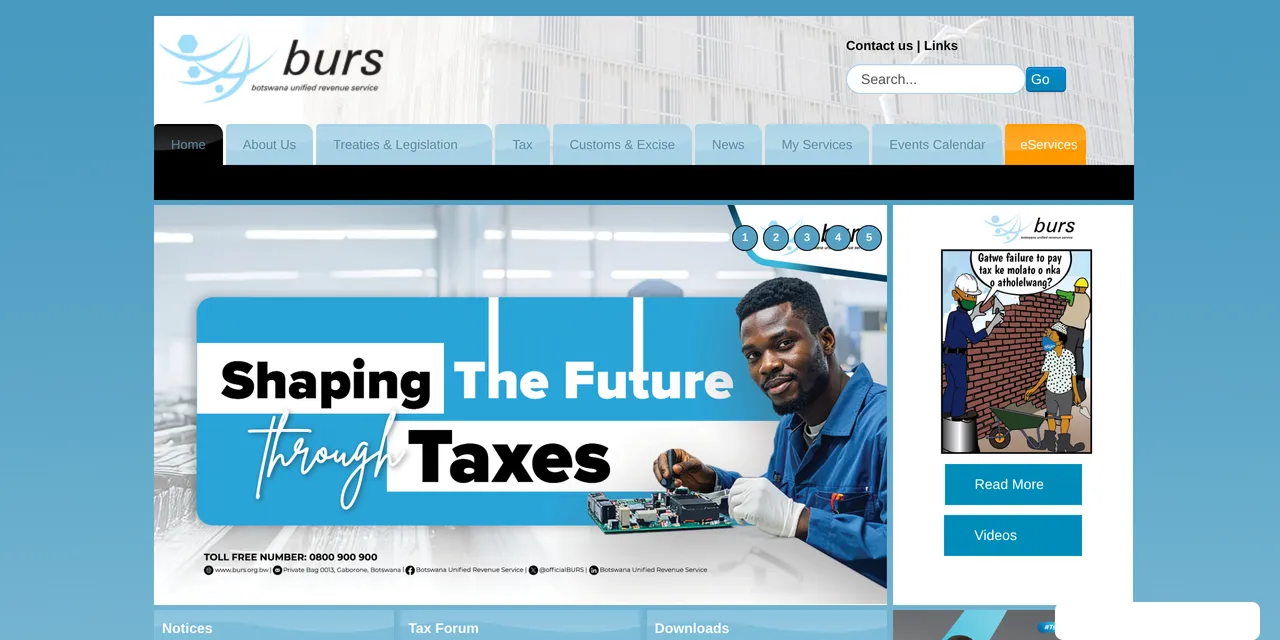
The Botswana Unified Revenue Service (BURS) is the government agency responsible for administering tax collection and customs and excise functions in Botswana. It oversees income tax, Value Added Tax (VAT), capital transfer tax, and Pay As You Earn (PAYE) obligations for individuals, companies, trusts, and other entities. The organisation also manages customs clearance, import and export procedures, and enforcement of trade agreements affecting goods entering or leaving the country.
Through its website, BURS provides taxpayers and traders with access to registration, tax return submission, and payment services via e-Tax and e-Customs platforms. Users can find information on tax rates, forms, downloads, tenders, auctions, and career opportunities, along with guidance on treaties, legislation, and trade agreements such as SACU and SADC. The site also publishes news updates, FAQs, and educational resources to help the public understand their tax and customs obligations.